प्रकाशित
Essential Techniques for Landscape Drawing and Composition
Effective landscape painting always begins with a robust planning phase centered in the sketchbook. Many artworks fail to reach their potential because the artist bypassed the drawing stage, leading to structural issues in the composition. Just as a builder would never start a house without a blueprint, an artist should not approach a canvas without a foundational sketch. Drawing is not only a logistical necessity for designing a balanced scene but also an enjoyable pursuit in its own right.
Ava Kensington Blair
लेखक

##
Effective landscape painting always begins with a robust planning phase centered in the sketchbook. Many artworks fail to reach their potential because the artist bypassed the drawing stage, leading to structural issues in the composition. Just as a builder would never start a house without a blueprint, an artist should not approach a canvas without a foundational sketch. Drawing is not only a logistical necessity for designing a balanced scene but also an enjoyable pursuit in its own right.
Selecting the Right Materials
To begin sketching, you need a range of graphite pencils to capture a full spectrum of light and dark tones. A standard kit should include 4H, 2H, HB, 2B, and 4B pencils. Additionally, you will need a high-quality sketchbook (A3 is a versatile size), a craft knife for sharpening, sandpaper for shaping the lead, an eraser, and an optional ruler for structural lines.
Mastering the Broad Stroke Method
One of the most effective ways to communicate the organic forms of a landscape is through the "broad stroke" method. This technique involves using a craft knife to expose approximately a quarter-inch of graphite and then filing it against sandpaper at an angle. This creates a flat, wedge-shaped tip.
When held evenly against the paper, this wedge produces uniform, wide marks that are ideal for shading large areas like hills or foliage. The very tip of the lead can still be used for fine details, but the flat side allows for a painterly, gestural quality in your pencil work. The key is to maintain a consistent angle and a steady, deliberate pace while making your marks.
Creating Depth Through Tonal Range
Depth and a sense of three-dimensional space are achieved by understanding the relationship between light and shadow. Hard pencils, such as 4H and 2H, produce lighter marks and are perfect for distant objects or subtle cloud formations. Because light appears paler in the distance, these pencils help push the background away from the viewer.
Conversely, softer pencils like 2B and 4B produce much darker, richer tones. These should be reserved for foreground elements and deep shadows. By placing your darkest values in the front and your lightest values in the back, you create a convincing atmospheric perspective that gives your drawing "room to breathe."
##
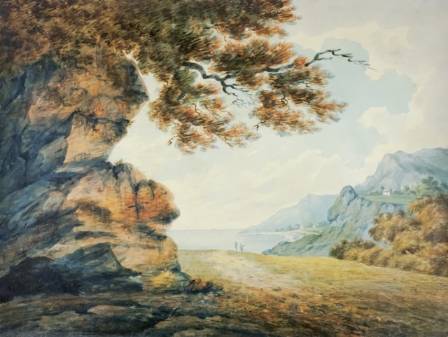
The Power of Thumbnail Sketches
Before committing to a final, detailed drawing, it is best to explore several "thumbnail" sketches. These are small, rapid drawings—usually taking only two to three minutes—that allow you to test different compositional arrangements. They should be drawn in the same proportions as your intended final piece. Once you have identified the most successful layout through these thumbnails, you can proceed to the full-scale sketch with confidence.
Demonstration: Rolling Hills of Northland
In this scene featuring New Zealand's characteristic pine trees and hills, the goal is to establish a clear focal point. After faintly outlining the scene with a 4H pencil, start shading the mid-tone distant trees with a 2H. For the trees in the middle distance, transition to an HB pencil to provide a darker value.
The foreground pine trees contain the darkest shadows of the piece, requiring a 4B pencil. To maintain realism, leave the areas representing grass as the white of the paper, using only light 4H strokes to suggest texture or distant slopes. This contrast between the dark trees and the bright grass highlights the intense sunlight of the region.
Demonstration: The Mountain River Valley
For a river valley composition, you can utilize a "steelyard" design. This involves balancing a large visual weight on one side (such as a cluster of foreground trees) with a smaller, distant weight on the other. This creates a sense of equilibrium without using perfect symmetry.
Following the light 4H outline, identify the key dark values in the cloud shadows, mountain ridges, and tree clusters. Use a 2H for the distant mountains and an HB for the middle-ground vegetation. The deepest shadows, particularly those within the poplar trees in the foreground, should be rendered with a 4B pencil to anchor the drawing. Small details like scattered wood or clumps of grass can be added last to provide a final layer of texture and realism.
आपके लिए और खबरें

Ten Essential Facts About the Bald Eagle
As a Guinness World Record holder and a symbol of national pride, the Bald Eagle is arguably the most famous bird in North America. These formidable predators are commonly found near large bodies of water, where they construct massive nests and dominate their ecosystems. While their image is synonymous with American identity, these raptors possess several unique and surprising characteristics that go beyond their patriotic reputation.

Unraveling the Charm: The Endearing Allure of Dogs and Cats
If your heart skips a beat at the sight of an exuberant puppy wagging its tail or a drowsy kitten stretching in a yawn, you're not alone. Humans have shared an enduring fascination with the irresistible cuteness of their furry companions for centuries. But what lies beneath this universal adoration? Why do we perceive cats as cute, and what is it about dogs that tugs at our heartstrings? Let's delve into the enchanting world of pet cuteness to unravel the mysteries behind our affection for these charming creatures.

Discover the Diversity: 6 Varieties of Daisies to Illuminate Your Garden
Daisies, an integral part of the vast Asteraceae family, comprise an astounding 10 percent of the world's flowering plants. While the Common Daisy and Gerbera Daisy often steal the spotlight, it's fascinating to note that there are over 20,000 distinct "daisy" species within this extensive plant family. The Asteraceae family boasts not only daisies but also includes members like sunflowers, chrysanthemums, and even lettuce.

Intriguing Seahorse Insights for Children
Despite their unusual appearance, these creatures are classified as fish.
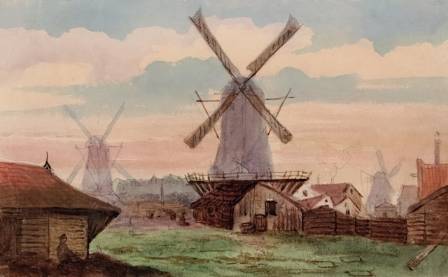
Simple Windmill Drawing: A Beginner's Guide to Illustrating Classic Structures
For hundreds of years, the distinctive silhouette of the windmill has captivated the imagination of artists. These iconic buildings are still a common sight in countries like Denmark, where they serve as a testament to both historical charm and engineering ingenuity. This lesson focuses on simplifying the complex appearance of a windmill into manageable shapes, allowing students to recreate the massive fan structure using basic geometric lines.

The 5 Best Lightweight Vacuums - Summer 2024
Thanks to advancements in design and materials, vacuum cleaners have become increasingly lightweight.