प्रकाशित
The Most Majestic Mountain Goat: An In-Depth Look
The mountain goat (Oreamnos americanus) is a striking cloven-footed mammal native to the rugged, high-altitude regions of western North America. This article revisits what makes these alpine creatures remarkable—from their anatomy and evolution to their habitat, movement, and diet—offering a concise, reader-friendly overview for naturalists and curious minds alike.
Megan Walker
लेखक
Introduction
The mountain goat (Oreamnos americanus) is a striking cloven-footed mammal native to the rugged, high-altitude regions of western North America. This article revisits what makes these alpine creatures remarkable—from their anatomy and evolution to their habitat, movement, and diet—offering a concise, reader-friendly overview for naturalists and curious minds alike.
Classification and Evolution
Mountain goats belong to the genus Oreamnos and are the sole living species in this group. They are part of the subfamily Caprinae within the Bovidae family, placing them among the broader “goat-antelope” lineages that include chamois, takins, and related species. Evolutionary history suggests the mountain goat diverged from its caprine relatives several million years ago, with ancestors likely crossing into North America from Asia via the Bering Strait. This lineage places them close to other mountain-adapted bovids, even as they remain distinct from true goats in the genus Capra.
Physical Characteristics and Adaptations
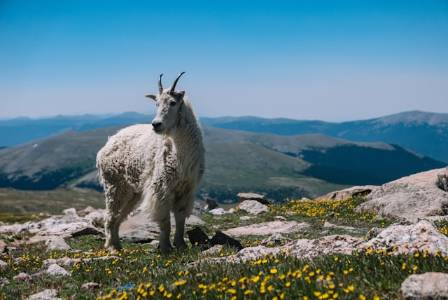
Both males and females boast beards, short tails, and long horns that range from 15 to 28 cm. Their double coats consist of a dense undercoat and a hollow outer layer, enabling survival in extreme cold—temperatures plummet to roughly −46 °C (−51 °F) with winds up to 160 km/h (99 mph). Adults can reach impressive sizes: males are typically larger, with a head-and-body length of 120–179 cm and a shoulder height around 1 meter. Their specialized hooves have sharp dewclaws and an intricate arrangement of pads and hooks that provide traction on slopes steeper than 60°, essential for navigating their cliff-faced habitats.
Habitat, Range, and Range Shifts
Mountain goats are primarily alpine and subalpine specialists inhabiting the Rocky Mountains, Cascade Range, and other Western Cordillera regions from the United States into Canada. They favor high elevations, with many individuals staying above the tree line year-round though seasonal migrations can occur in response to food and weather. While British Columbia hosts a large portion of the global population, introduced populations appear in several western states, reflecting their adaptability to rugged terrain and specific ecological niches.
Movement, Foraging, and Behavior
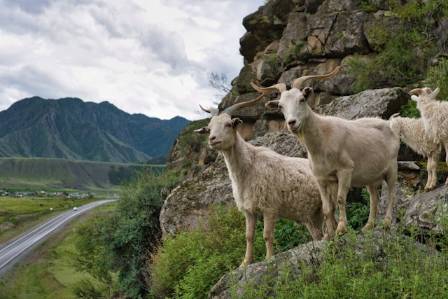
Daily movement tends to be conservative, often restricted to the same mountain face or drainage basin as the individual goat seeks for foraging, thermoregulation, and security. Seasonal movements are driven by nutritional needs and reproductive cycles, with elevations shifting to balance food availability and thermal cover. In winter, goats may travel to mineral licks, sometimes crossing forested valleys, to sustain their mineral intake and energy needs.
Diet and Foraging Habits
Mountain goats are herbivores whose forage includes grasses, herbs, sedges, ferns, mosses, lichens, and twigs from high-altitude shrubs and conifers. In captivity, they can be fed a more varied diet that includes grains, alfalfa, fruits, vegetables, and greens. Their foraging strategy emphasizes efficient use of sparse alpine resources, supporting their energy-intensive life on steep terrain.
Conservation Status
According to the IUCN Red List, mountain goats are currently classified as Least Concern. This status reflects their wide distribution across rugged habitats and relatively stable populations, though local threats such as habitat disturbance and climate-related changes can impact specific populations.
Conclusion
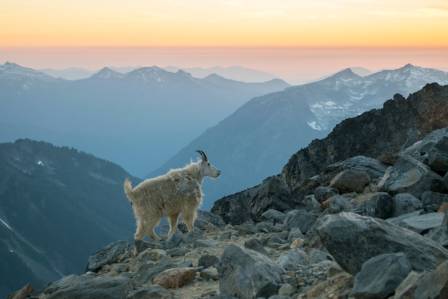
The mountain goat embodies the harmony between form and function—built for extreme terrain, with adaptations that allow it to thrive where few other mammals can. From its evolutionary roots to its cliff-dwelling lifestyle and specialized diet, the mountain goat remains a testament to nature’s ingenuity in the world’s most challenging environments.
आपके लिए और खबरें

Ten Essential Facts About the Bald Eagle
As a Guinness World Record holder and a symbol of national pride, the Bald Eagle is arguably the most famous bird in North America. These formidable predators are commonly found near large bodies of water, where they construct massive nests and dominate their ecosystems. While their image is synonymous with American identity, these raptors possess several unique and surprising characteristics that go beyond their patriotic reputation.

Unraveling the Charm: The Endearing Allure of Dogs and Cats
If your heart skips a beat at the sight of an exuberant puppy wagging its tail or a drowsy kitten stretching in a yawn, you're not alone. Humans have shared an enduring fascination with the irresistible cuteness of their furry companions for centuries. But what lies beneath this universal adoration? Why do we perceive cats as cute, and what is it about dogs that tugs at our heartstrings? Let's delve into the enchanting world of pet cuteness to unravel the mysteries behind our affection for these charming creatures.

Discover the Diversity: 6 Varieties of Daisies to Illuminate Your Garden
Daisies, an integral part of the vast Asteraceae family, comprise an astounding 10 percent of the world's flowering plants. While the Common Daisy and Gerbera Daisy often steal the spotlight, it's fascinating to note that there are over 20,000 distinct "daisy" species within this extensive plant family. The Asteraceae family boasts not only daisies but also includes members like sunflowers, chrysanthemums, and even lettuce.

Intriguing Seahorse Insights for Children
Despite their unusual appearance, these creatures are classified as fish.

Simple Windmill Drawing: A Beginner's Guide to Illustrating Classic Structures
For hundreds of years, the distinctive silhouette of the windmill has captivated the imagination of artists. These iconic buildings are still a common sight in countries like Denmark, where they serve as a testament to both historical charm and engineering ingenuity. This lesson focuses on simplifying the complex appearance of a windmill into manageable shapes, allowing students to recreate the massive fan structure using basic geometric lines.

The 5 Best Lightweight Vacuums - Summer 2024
Thanks to advancements in design and materials, vacuum cleaners have become increasingly lightweight.