प्रकाशित
When was the very first robotic arm invented?
In the early stages of developing the mechanical arm, the word “robot” was intentionally avoided.
Noah Bennett
लेखक
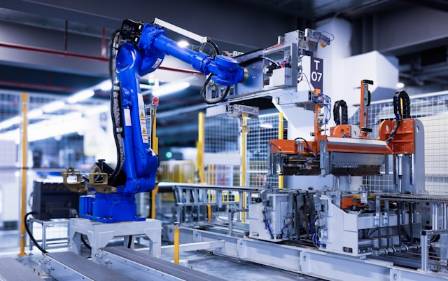
In the early stages of developing the mechanical arm, the word “robot” was intentionally avoided. At the time, the term carried a sense of fiction and cinematic fantasy, and engineers feared these associations might slow public acceptance. As automation matured and society grew more comfortable with advanced machinery, the label “robot” gradually became standard within the industry.
This article explores the origins of robotic arms and examines how they have progressed since their earliest prototypes.
Early Concepts of Robots and Mechanical Arms
The modern idea of a robot—a machine capable of imitating human reasoning or movement to achieve tasks—did not appear overnight. Instead, it developed through centuries of ideas, prototypes, and conceptual leaps.
Several historical stages significantly contributed to the formation of what we now call a “robot”:
As early as 322 BC, Aristotle speculated in Politics that self-operating devices could one day eliminate the need for slavery by reducing human labor.
Around 1495, Leonardo da Vinci sketched out designs for an automated mechanical figure, one of the earliest examples of humanlike machinery.
In the 18th century, French inventor Jacques de Vaucanson created an automated duck capable of imitating natural movements.
During the 19th century, Japanese artisan Hisashige Tanaka engineered intricate mechanical dolls capable of performing simple programmed motions.
The first attempts at industrial robots appeared in the United States in the 1930s. Inventors there began designing mechanical manipulators whose articulated joints were modeled after the human shoulder, arm, and wrist. These machines were intended to mimic repetitive actions such as lifting, pushing, and pressing. In 1938, Willard V. Pollard filed the earliest recorded patent for a motorized arm, which he described as a “Position Controlling Apparatus.”
A major breakthrough came in 1954 when George Devol created the first programmable, digitally controlled robot: the Unimate. This machine laid the groundwork for modern robotics, and by 1960, General Motors purchased the first commercial unit.

When and Why the First Robot Arm Was Invented
In 1962, George Devol and Joseph Engelberger founded Unimation—short for “universal automation”—the world’s first robotics company. Their flagship product, the Unimate robotic arm, soon became the first industrial robot to achieve commercial success. Designed initially for automobile manufacturing, the Unimate was able to assist with welding, material handling, and other repetitive production tasks.
As factories sought safer and more efficient ways to automate labor-intensive activities, the Unimate quickly found its place. Automakers were early adopters, using the robotic arm to streamline assembly lines and reduce worker exposure to hazardous conditions. Its usefulness later expanded into electronics, metalworking, and food processing, where speed and precise repetition were essential.
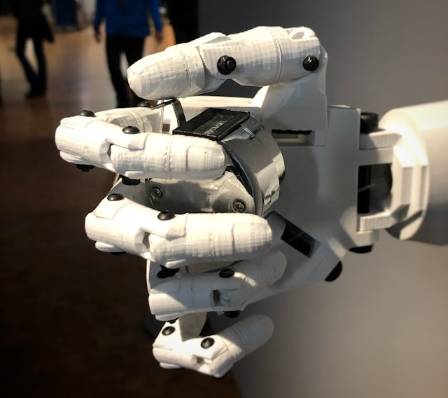
Features of the First Industrial Robotic Arm
The Unimate consisted of a multi-jointed arm fitted with a gripping mechanism. Its programming allowed it to carry out operations such as lifting, positioning, and assembling parts. The system featured a three-axis arm capable of handling objects weighing up to 226 kilograms. With hydraulic actuators powering its movements, the robot could apply steady force thanks to the consistent pressure of hydraulic fluid (Inst Tools, 2019).
This groundbreaking invention introduced unprecedented efficiency in material handling and welding tasks. Yet it also sparked controversy. While the robot reduced workplace hazards and improved production reliability, it also raised fears about job displacement. Because of these concerns, early adoption was slow as businesses hesitated to fully embrace robotic automation.
आपके लिए और खबरें
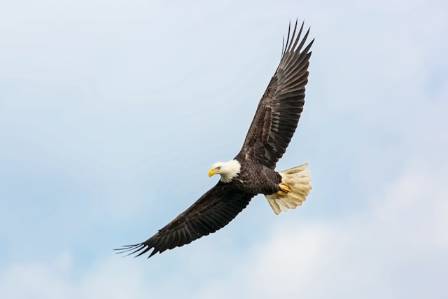
Ten Essential Facts About the Bald Eagle
As a Guinness World Record holder and a symbol of national pride, the Bald Eagle is arguably the most famous bird in North America. These formidable predators are commonly found near large bodies of water, where they construct massive nests and dominate their ecosystems. While their image is synonymous with American identity, these raptors possess several unique and surprising characteristics that go beyond their patriotic reputation.

Unraveling the Charm: The Endearing Allure of Dogs and Cats
If your heart skips a beat at the sight of an exuberant puppy wagging its tail or a drowsy kitten stretching in a yawn, you're not alone. Humans have shared an enduring fascination with the irresistible cuteness of their furry companions for centuries. But what lies beneath this universal adoration? Why do we perceive cats as cute, and what is it about dogs that tugs at our heartstrings? Let's delve into the enchanting world of pet cuteness to unravel the mysteries behind our affection for these charming creatures.

Discover the Diversity: 6 Varieties of Daisies to Illuminate Your Garden
Daisies, an integral part of the vast Asteraceae family, comprise an astounding 10 percent of the world's flowering plants. While the Common Daisy and Gerbera Daisy often steal the spotlight, it's fascinating to note that there are over 20,000 distinct "daisy" species within this extensive plant family. The Asteraceae family boasts not only daisies but also includes members like sunflowers, chrysanthemums, and even lettuce.

Intriguing Seahorse Insights for Children
Despite their unusual appearance, these creatures are classified as fish.
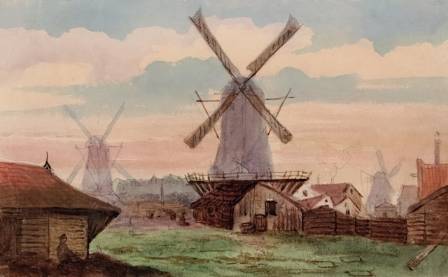
Simple Windmill Drawing: A Beginner's Guide to Illustrating Classic Structures
For hundreds of years, the distinctive silhouette of the windmill has captivated the imagination of artists. These iconic buildings are still a common sight in countries like Denmark, where they serve as a testament to both historical charm and engineering ingenuity. This lesson focuses on simplifying the complex appearance of a windmill into manageable shapes, allowing students to recreate the massive fan structure using basic geometric lines.

The 5 Best Lightweight Vacuums - Summer 2024
Thanks to advancements in design and materials, vacuum cleaners have become increasingly lightweight.